

By Sue Viskovic on March 26, 2026

The Daily Huddle is not a new idea; brought to fame by Verne Harnish in his book, the 10 Rockefeller Habits, we encourage all advisers to do these powerful sessions at the same time every day in their business, and those who implement this simple habit find their teams move forward in leaps and bounds.
Please note: this article qualifies for 0.25 CPD credits; accessible via this quiz.
It’s ironic that many people dismiss the huddle when they’re super busy and their team is stretched beyond capacity, afraid that adding a 5-to-10-minute daily meeting will reduce their efficiency and output. Ironic, because the reverse outcome usually occurs!
Here’s a great reminder of how powerful this particular part of a great operating rhythm can be, and how to make it work in an advice firm.
What is it?
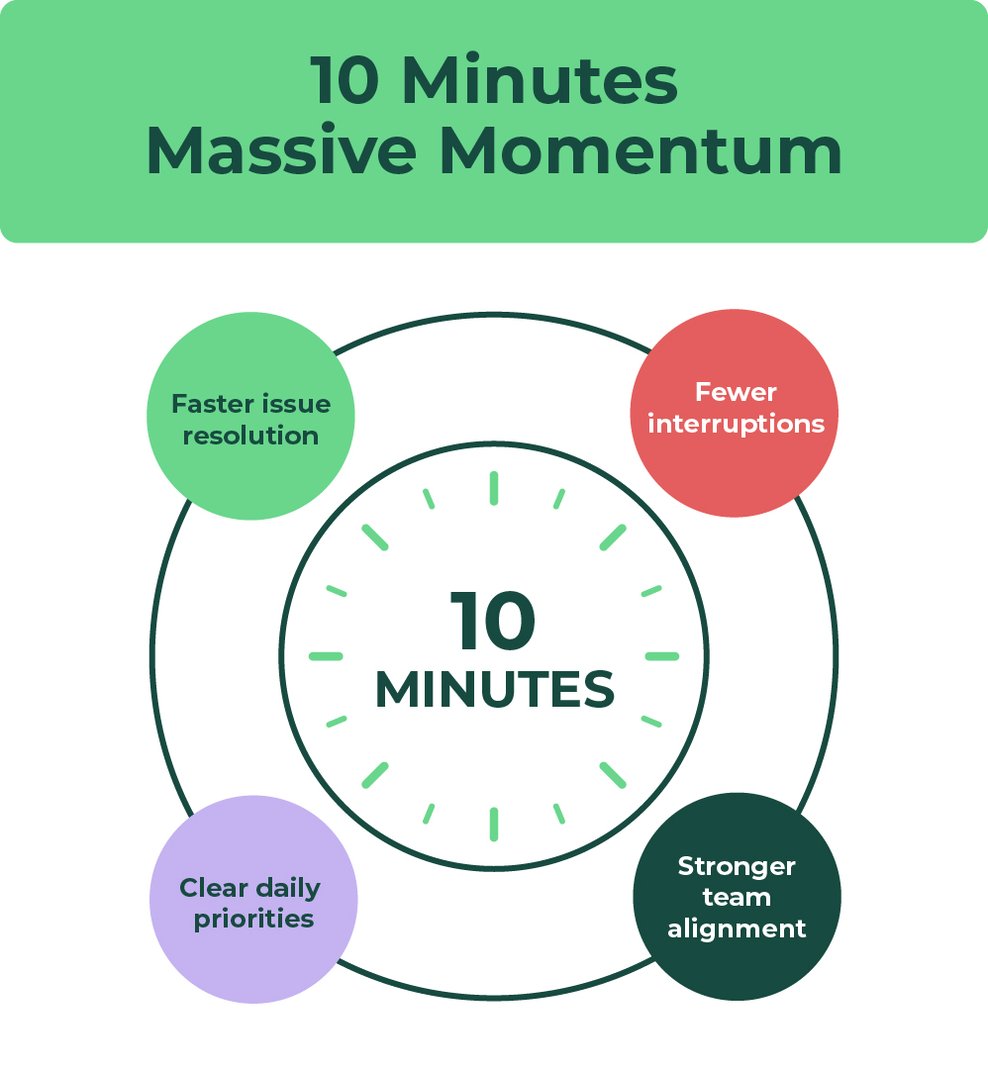
Essentially, the daily huddle is a 5–to-10-minute, high energy stand-up meeting that occurs at the same time every day (usually first thing), where everyone in the business shares their priorities and stumbling blocks and then goes about their day.
Why is it so powerful?
We get it. That feels like a LOT of time potentially wasted if it’s “just another meeting”. When done well, the huddle will not only keep everyone in the loop about what’s happening in the business (saving countless emails and ad hoc interruptions), help solve issues quickly, make everyone feel more connected (especially for remote teams) and keep everyone focused on what’s most important for their day. Nobody wants to be ‘that person’ who is clearly unprepared for the huddle.
Preparation prevents poor performance
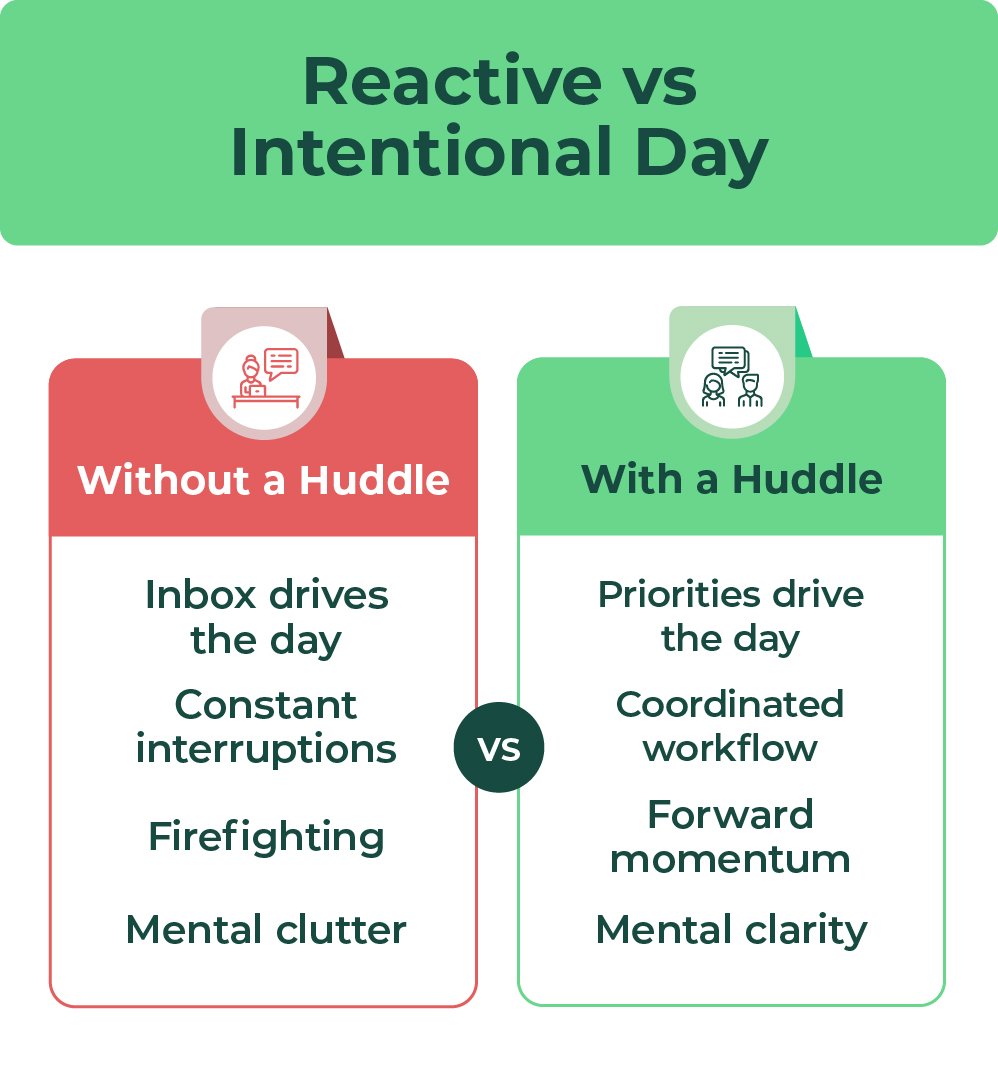
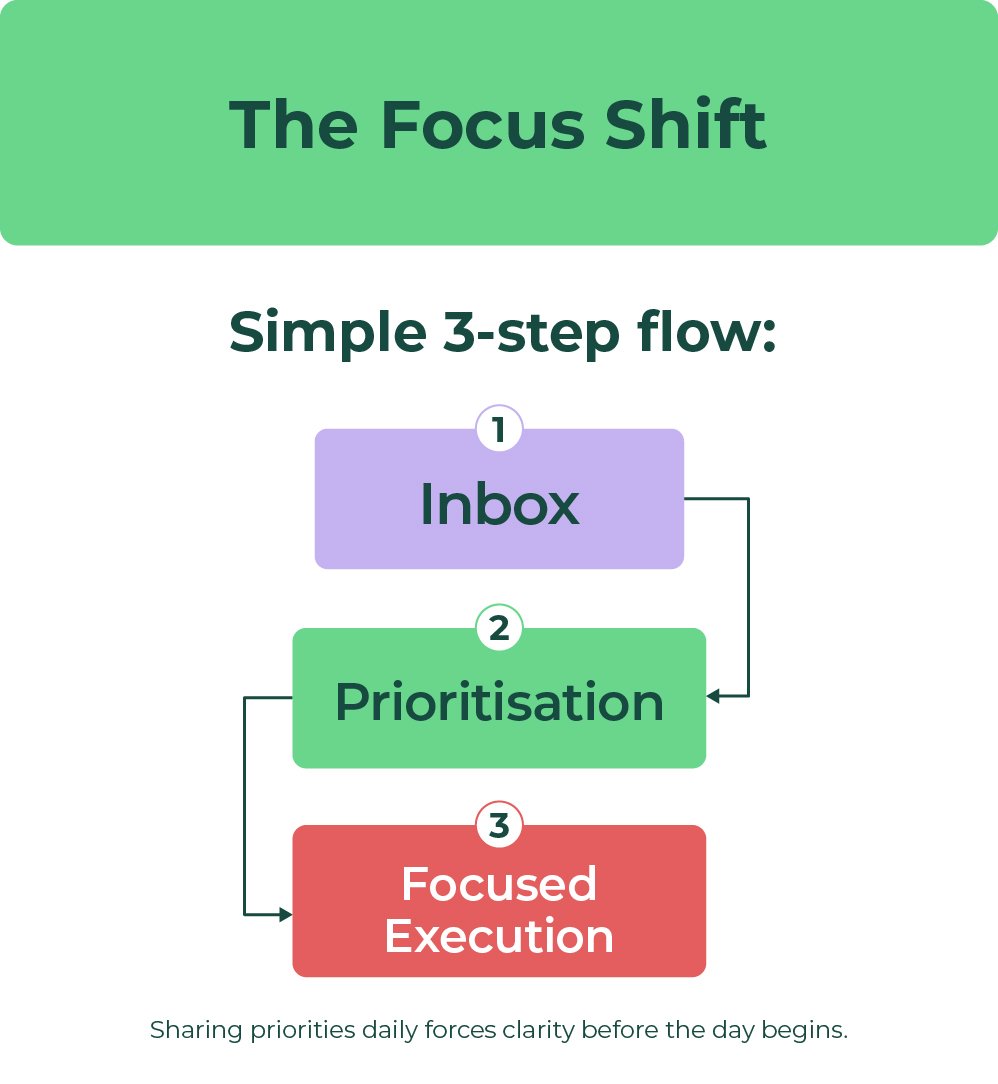
Knowing that we’ll be sharing our biggest priorities for the day in the huddle forces everyone on the team to organise their day and not fall into the habit of letting the inbox rule their workflow. Not only does this create the focus we all need to maximise productivity, but it also helps to keep overwhelm at bay. Let’s face it; it’s a rare day in this game that we are not spinning multiple plates, often whilst trying to catch someone else’s. The clarity that comes from quantifying and prioritising our to-do lists and differentiating between what's urgent and important is remarkable. In this way, even the largest to-do list feels more manageable.
Being Stuck
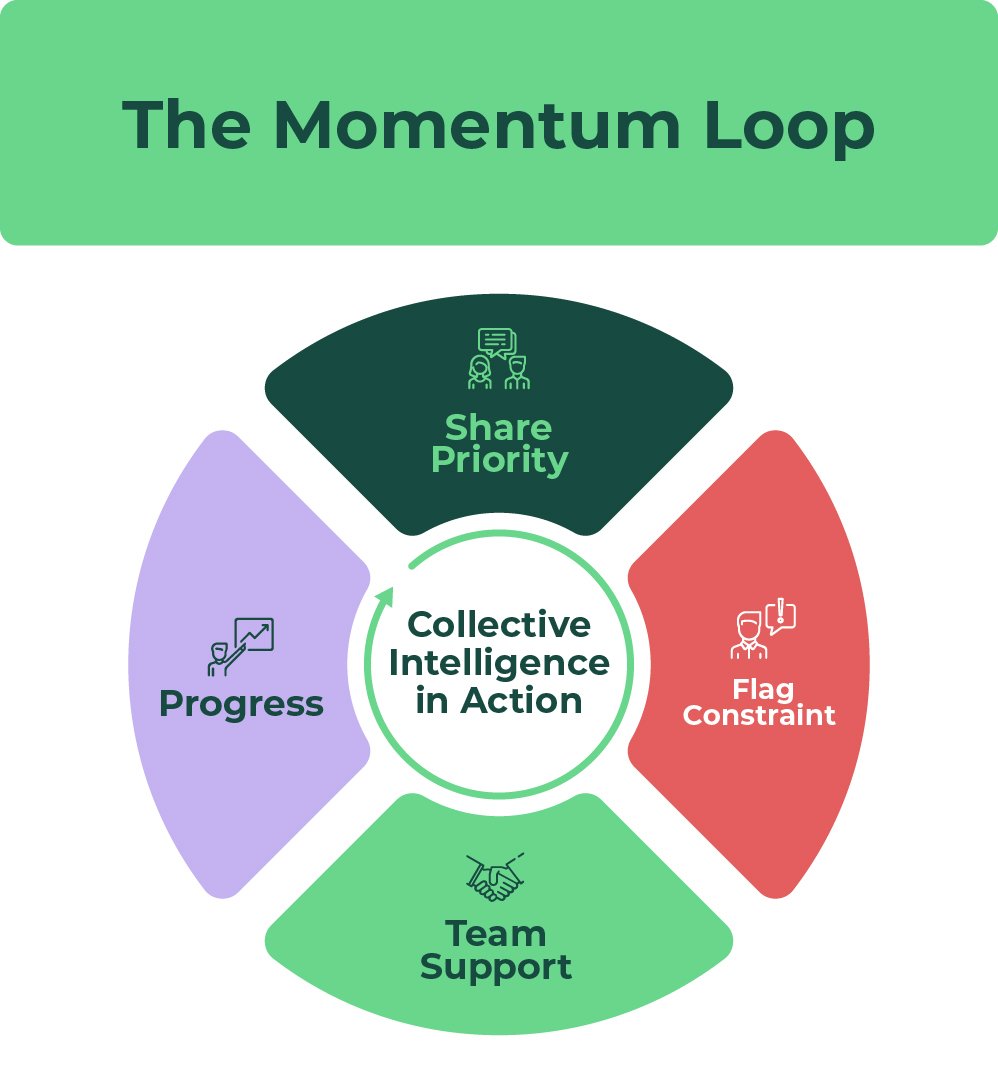
It’s very common for people to have challenges in their daily tasks, and being stuck on something is a waste of time and mental energy! Having the ability to flag an issue at a group meeting enables everyone to stick their hand up when they need help; and the collective wisdom of the group, or even a helpful volunteer from the team could make all the difference between being stuck and feeling empowered to achieve more.
Accountability
You either love it or you don't. If you're in the don't camp, then learning to love it is easy.
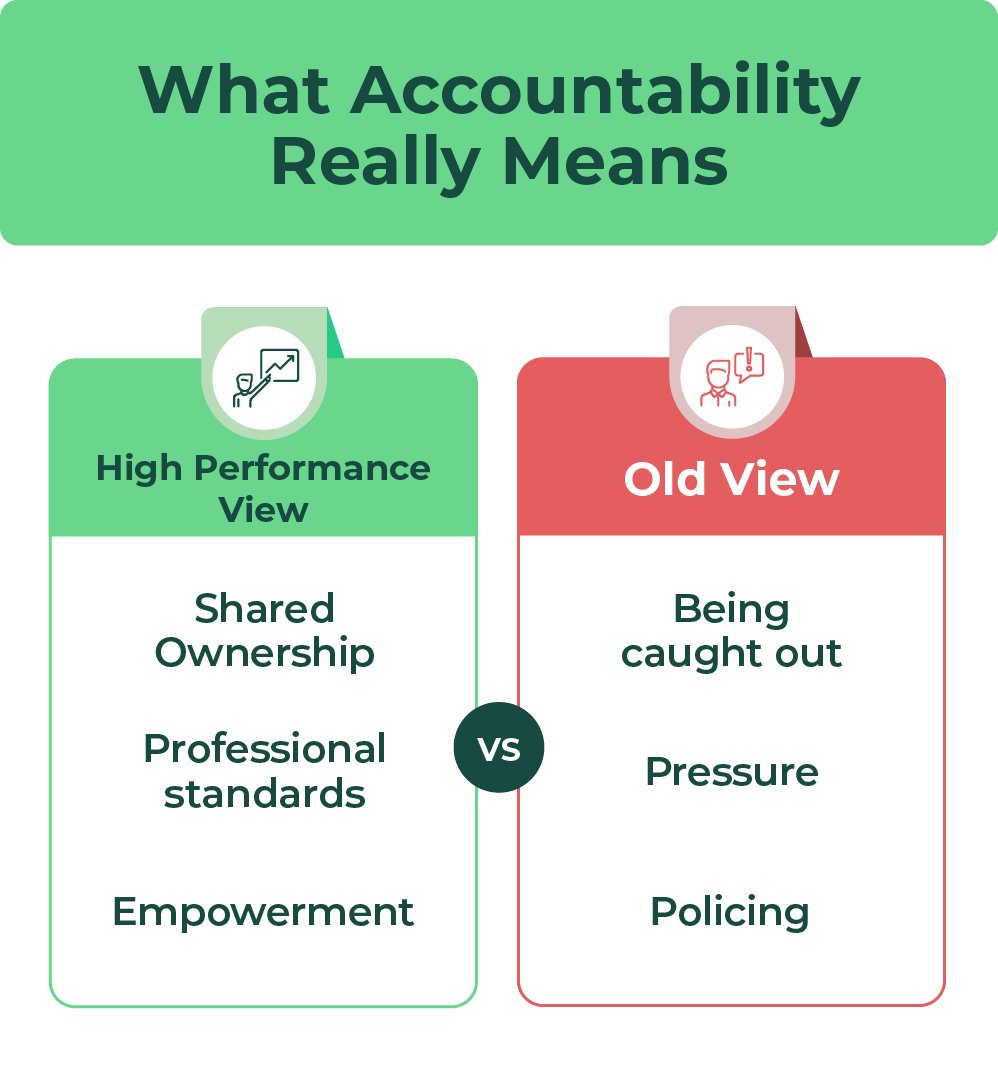
If we're all working for a common purpose in business, then we are all striving toward the same thing. Accountability can sometimes be seen as 'being caught out' but if we flip that and think about everyone in the team coming together to agree to the vision, values and goals of the business then we are all clear on the expectations of ourselves and each other. This is about empowering everyone in the team to do their role, do it well and deliver on promises. Accountability is a critical part of every high-performance team.
Guiding Principles for a Power Packed Pow-wow
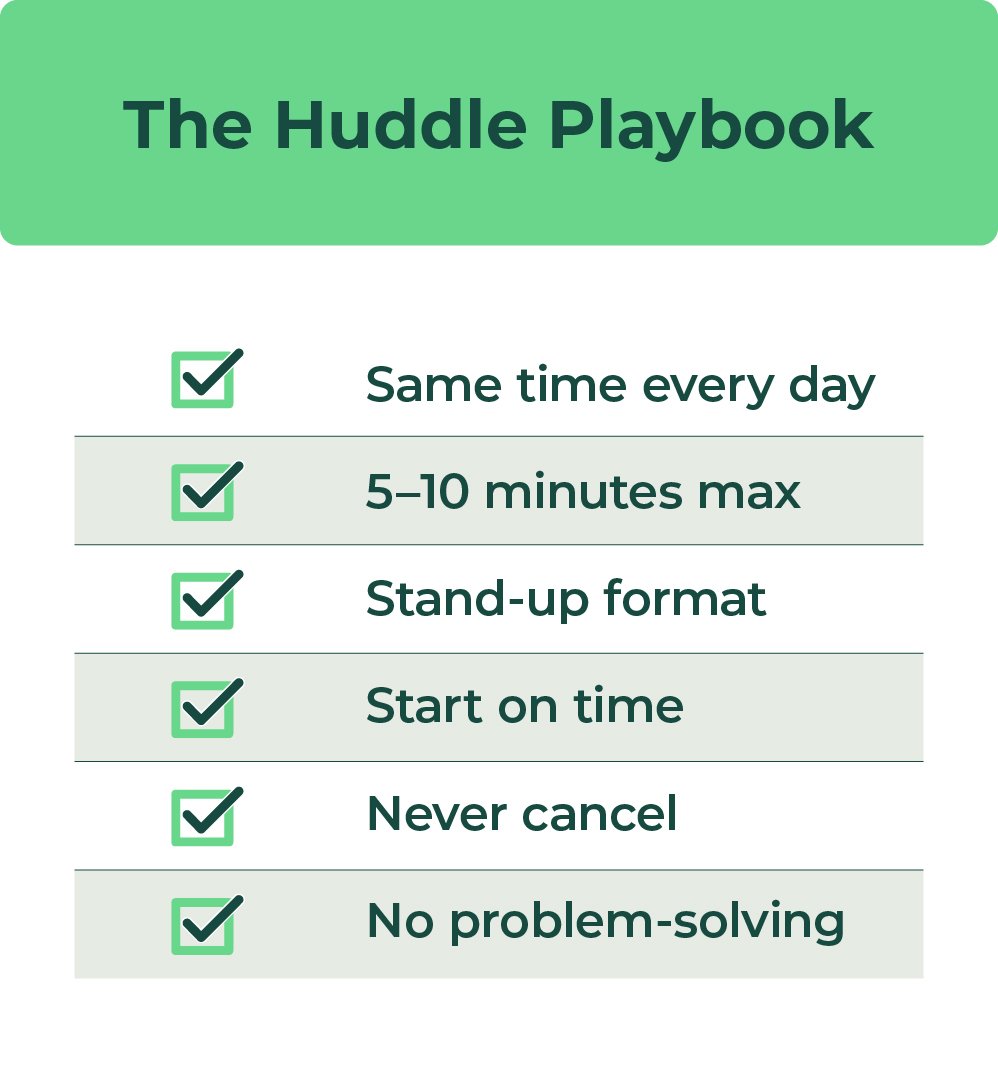
Communicate, communicate, communicate! Set the guidelines for your meetings; share why you’re doing them and decide who, what, where and how. Make it really simple – everyone, every day.
- Depending on the size of your team, you may have one firm-wide huddle or you may break out teams who work on the same clients, but regardless, everyone in the business should attend a daily huddle.
- Typically, a daily huddle would run between 5 and 10 minutes depending on the size of your team;
- Set your agenda for what will work in your business and stick to the same agenda for every huddle (see below for some examples).
- When it comes to staying on task and on time, it’s a great idea to have someone lead the meeting. Choose someone who is great at sticking to time and to the agenda. Some of us are not natural timekeepers, so it’s important that they can keep the pace snappy and identify when people need to put a pin in a discussion and pick it up with only the relevant people after the huddle.
- Put it in everyone’s calendar at the same time every day as a non-negotiable appointment, making it everyone’s habit to join in-person or via Teams/Zoom. You could call it the daily huddle, or ‘9 at 9’ , ’10 at 10’. It doesn’t matter what you call it. It’s the single biggest thing that’s going to give you and your team focus on the business every day.
- Always start the meeting on time and never cancel a huddle. If people are late, start anyway; if some people are in client meetings or away, hold it anyway with those who are present.
- Make it a stand-up meeting, bring your coffee with you, give everyone 20 seconds to settle and then straight into it. Even if you’re dialing in, get everyone to stand for the session to keep the energy high and snappy.
- Don’t get into problem-solving or go down rabbit holes. Save that for the key people required, at another time (immediately after the huddle is fine, while everyone else goes about their day).
- Don’t be surprised if your first few huddles feel clunky. Push through the discomfort until you find your rhythm and everyone learns how it works. The biggest derailer of the huddle is people going into detail or just generalising. “I’m working on client files” won’t cut it. “I’m doing the product research on Smith and Jones and finalising the data entry for Jamison, plus getting the 5 review packs ready for Samantha’s meetings next week”, or “I’m doing a new enquiry call with Ella Davis, Strategy Discussion meeting with the Doncasters and getting the paraplanning instructions for Clint Barker off my desk”. If people have prepared their priorities for the day, these specifics will be easy to share.
Powerful Points not PowerPoint
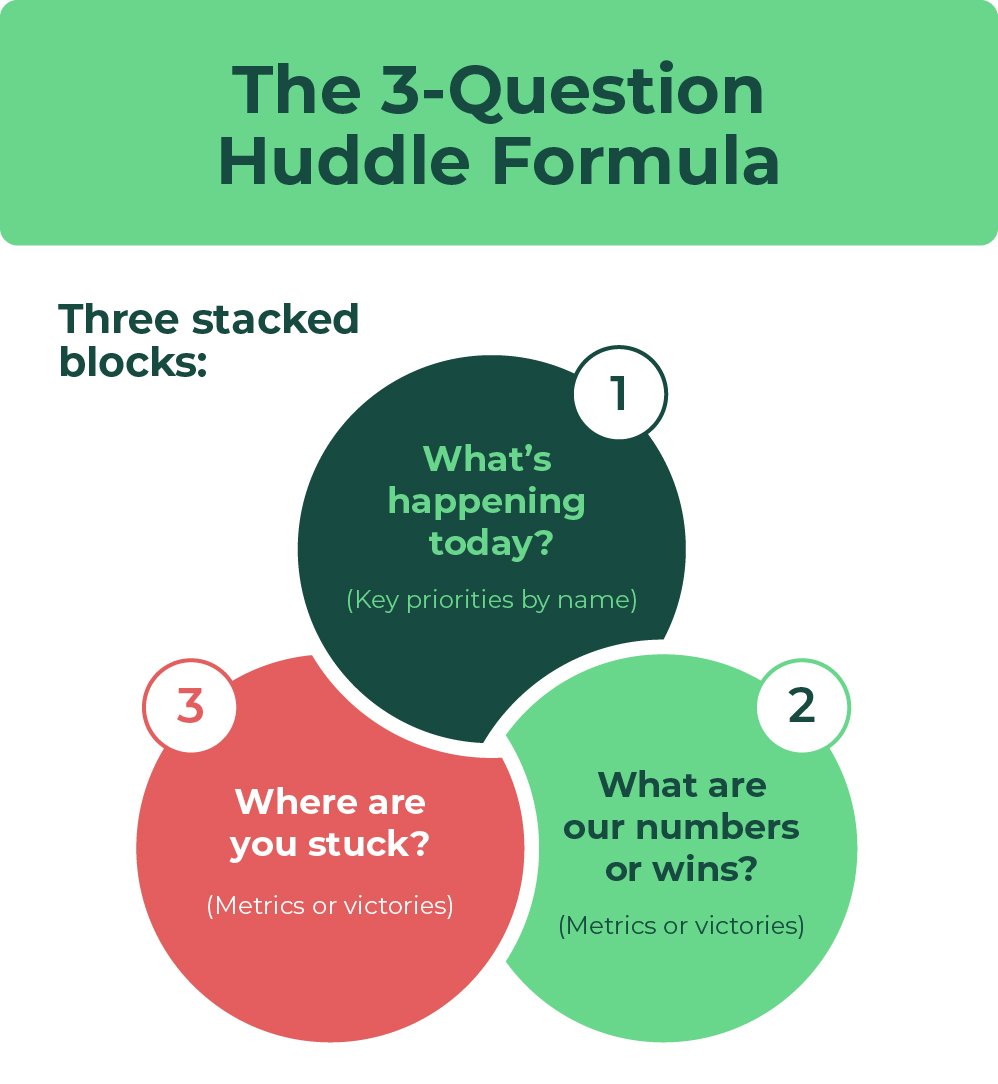
To stay on track, a meeting should always have an agenda. This one is no different and it's the same agenda every day! There are 3 key things you would usually report in this meeting. The huddle described in The Rockefeller Habits requires three things from each person, but if the second element doesn’t work in your business, stick with two, or find a different, relevant critical item to share.
- What's happening today – your way to let everyone know what’s going on in your work life today. We’re talking key activities of the business, the things you really want to get off your desk today (specifically, and by name if it’s client work). Doing this is a great way for the team to understand what people are working on, to coordinate priorities, i.e., “If you’re able to get the Jones file back to me by noon, I’ll be able to do the Insurer calls this afternoon and research Smith at the same time”. It also reveals who’s super busy and if possible, what other resources might be available to help out. Little pieces of information that arise here raise awareness of the whole team and can often stop confusion or redundancy, and save time, money and frustration.
- Daily metrics – or alternatively, yesterday’s victories. Following the philosophy that all great teams have firm metrics for what they want to achieve, it’s suggested that each team shares their progress. In an advice firm that may be “x advice docs finalised (paraplanning team), y implementation tasks closed off (admin team), z client meetings conducted so far this week (advisers)”. A growth firm might also include the number of new enquiries or new clients signing a TOE. An alternative we’ve seen that also works well for firms that have critical measures on a weekly or monthly basis rather than more granular daily basis, is sharing a victory or celebration each day in the huddle, be that for the business, for a client or for a team member who displayed your core values yesterday.
- Where you’re stuck – having each team member raise any constraints or concerns that could stand in their way of having a great day is vitally important, enabling the leader to see any patterns or underlying issues, and allowing people to share expertise to solve challenges. Of course, larger issues will require an offline conversation between the people best able to solve the problem, but often it’s a simple awareness, or reminder of connected priorities in the team. Examples could be “I need the research back on Davison in order to finish the SOA for Friday’s deadline”, or “I waited on hold for 50 minutes with the xyz claims team before being told that the assessor isn’t back until next week”.
Of course, the daily huddle is just one part of an effective operating rhythm in business. When implemented well, they are a beautiful thing, leading to greater team engagement, expectations understood, putting out fires and building momentum for a business going to the next level.
If you’re wanting to hear directly from Verne Harnish, watch him speak about how the daily huddle worked for John D Rockefeller and Steve Jobs in this video.
…Hang on, before you go, what about my offshore team?!
Where you have offshore Team Members, the importance of Daily Huddles doubles.
Whilst all the above points are still 100% relevant, there needs to be a little more to it.
As you don’t physically see your offshore Team Members, you miss out on all the micro interactions of a typical office environment. Your offshore Team Members won’t overhear an in-office conversation about that process tweak or client update. They won’t get the typical “how was your weekend?” as they arrive to work on a Monday morning or the “Did you catch last night’s episode of I’m A Celebrity” as they fire up their computer.
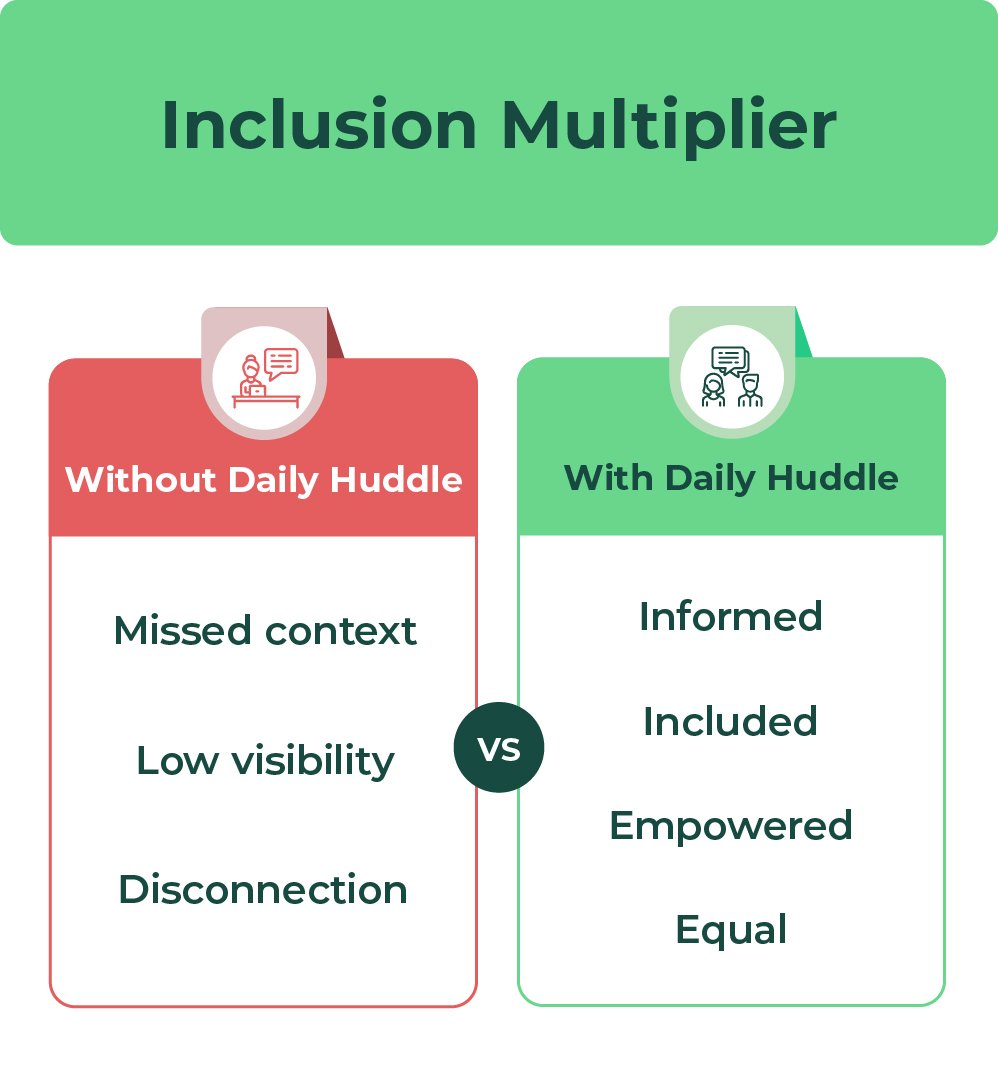
Firstly, the work side. Ensure the Team Members are updated with the latest relevant information from around the office. Staffing changes, process changes, task prioritisation needs, significant updates on clients, challenges being faced onshore. Being better informed will not only allow them to do their job better, but it will also make them feel included, part of the team. Not just someone at the end of an internet connection. And this is really important!
Now the non-work ‘stuff’. All cultures are different (thank goodness!) and it’s important to understand how your offshore team views things, what makes them tick, what will motivate them, how they will feel in different situations. For over a decade VBP has been operating from the Philippines and over that time, a lot has been learned about working with Filipino Team Members. Stemming from a long history of invasion, Filipino’s tend to rank themselves very low against other nationalities. They can be very submissive or subservient in nature when dealing with foreign businesses. Especially with people of power within those businesses - business owners, executives, managers etc. Ideally, you want to see your offshore Team Members empowered and confident…as equals.
How do I do that I hear you ask? Daily Huddles! By regularly engaging in non-work-related chats, the Team Member will start to see you as an equal, a normal person, not some overlord. “Tell me about your family. What are you binge watching on Netflix right now? How was that art class you said you were going to attend?” And most importantly, share information back to them about yourself. These regular “normal” chats will soon break down some of those misconceptions and we see a direct link between the strength of the onshore/offshore personal relationship and the motivation, commitment and quality of work of our offshore Teams Members.
A few minutes a day has more impact than you can imagine.
If you’re wanting more help to get your team in alignment and your engine room humming, speak with one of our consultants today.

How Invest Blue is Harnessing the Power of Outsourcing

Melbourne Advice Firm Launches AI-Powered Automation in Collaboration with VBP